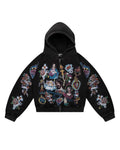
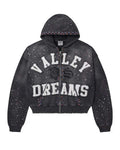
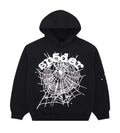
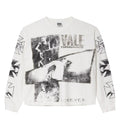
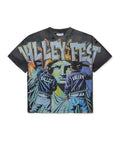
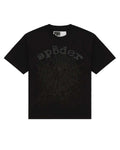
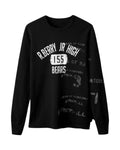
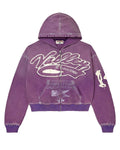
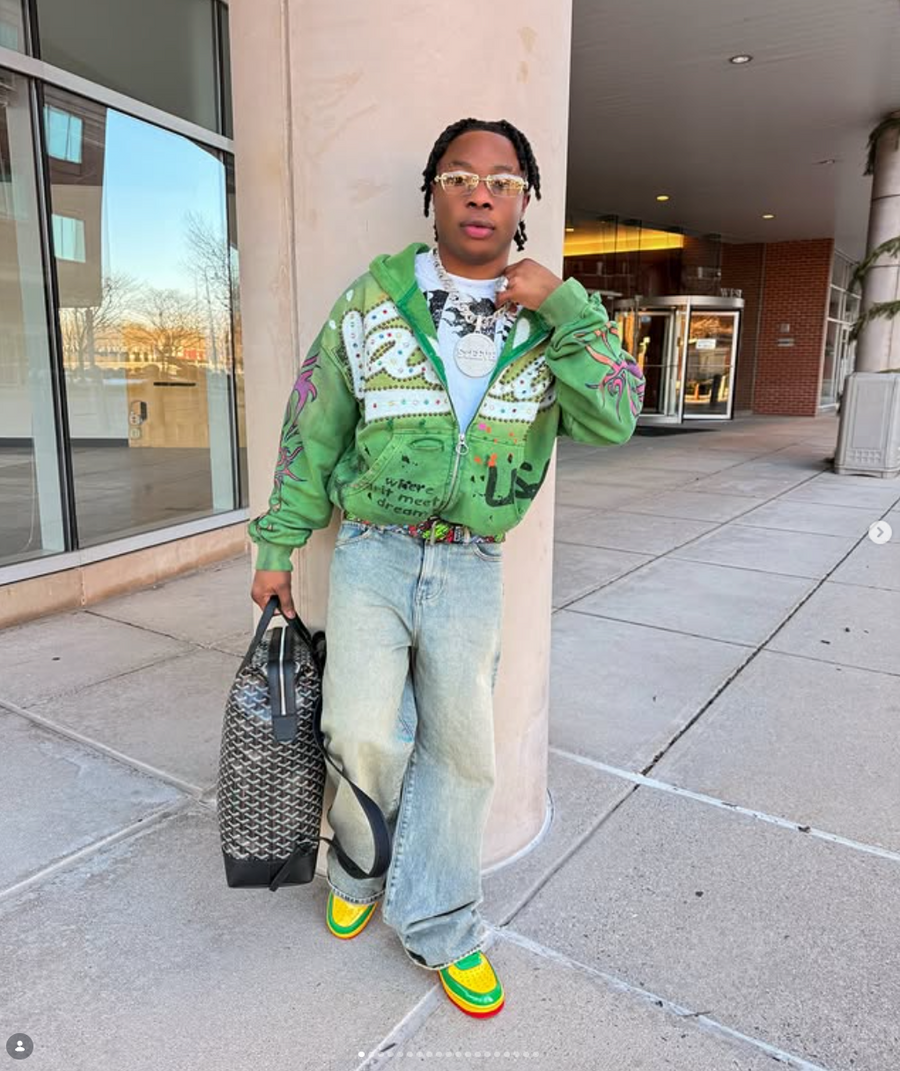
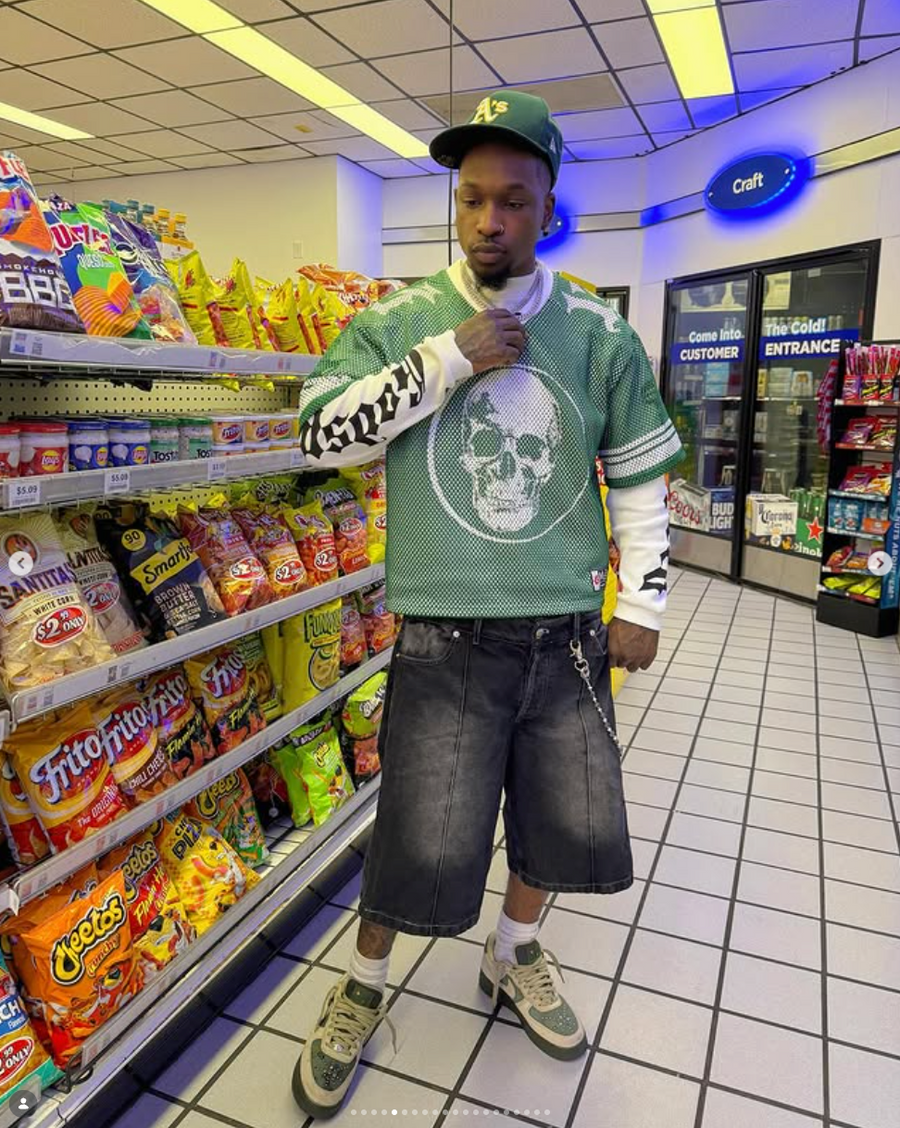
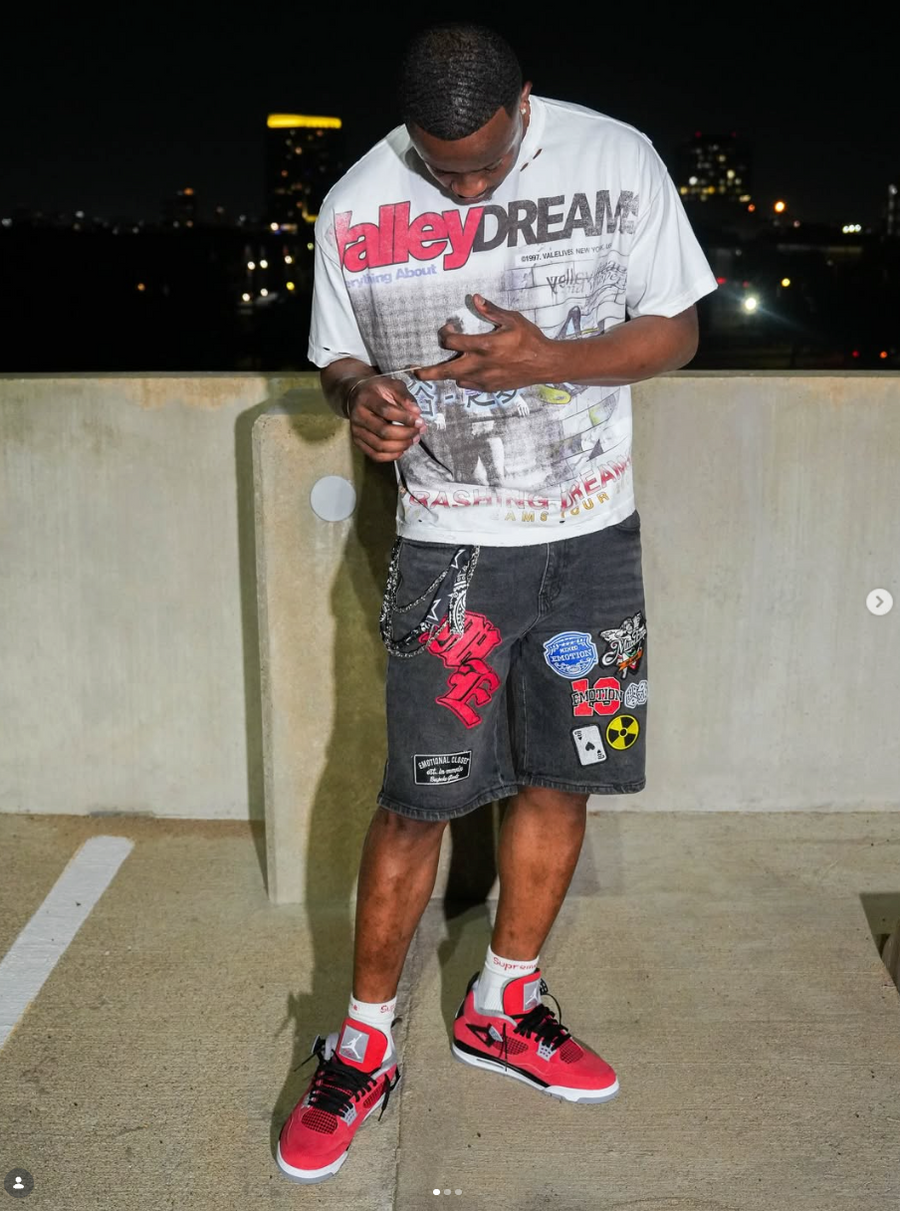
The fastest way to assess a Hellstar tee is to evaluate several details together. Start with the tags, print application, stitching and the overall build of the piece. Counterfeits can copy one feature well while missing the way all of the details should agree.
01 // Authentication checkPrimary signal
Neck tag.
The neck tag is a useful starting point because typography, spacing, placement and finishing are difficult to reproduce perfectly across many counterfeit batches.
✓ Authentic — what to verify
- Lettering is thick and tightly spaced — on verified examples a word like “COLD” reads compact, with characters nearly touching.
- White lettering carries a distinct black shadow layer behind it, printed crisply.
- Tag is firmly sewn with clean, even stitching, on material that feels substantial.
× Counterfeit — common red flags
- Thin characters with exaggerated spacing (“C O L D” instead of a compact “COLD”).
- Missing or muddy shadow layer behind the white lettering; blurry printing.
- Flimsy tag material, loose threads, crooked attachment, or any spelling error.
Restock note
Do not authenticate a hoodie from the neck tag alone. Tags can change between collections, and high-quality replicas may reproduce one label convincingly.
02 // Authentication checkHigh-value comparison
Print & graphic.
Look at the entire graphic before focusing on one tiny detail. Check the application, alignment, edges, texture and how the design sits on the garment.
✓ Authentic — what to verify
- Graphics are screen printed: they sit flat in the fabric with a matte finish and clean edges.
- Inside the web and lettering, the small white dots stay separated — each dot distinct.
- Secondary lettering under the main logo is thick — on many verified pieces it nearly merges.
× Counterfeit — common red flags
- Print feels raised, rubbery, or plasticky (cheap transfer or direct-to-garment application); edges look blurry.
- Web dots bleed together or overlap into blobs.
- Bloated 3D “bubble” letters, stretched proportions, or a slightly wrong font; print cracks or peels after washing.
Restock note
Print methods can vary. Avoid blanket claims such as 'real always has puff print' unless your team has confirmed that statement for the exact piece being discussed.
03 // Authentication checkSecondary signal
Wash tag.
Care labels often carry several small details at once, making them useful for comparison when you have trustworthy examples from the same product family.
✓ Authentic — what to verify
- A prominent, thick black line detail appears near the release blocks on verified examples.
- Consistent text hierarchy, spacing and alignment, with clean print quality.
- Care information agrees with the rest of the garment.
× Counterfeit — common red flags
- The black line detail is noticeably thinner or smaller than on trusted examples.
- Unexpected fonts, awkward spacing or misaligned lines.
- Poor label material, crooked attachment or blurred printing.
Restock note
Wash tags change across production periods. Treat the line detail as one comparative signal, never proof on its own.
04 // Authentication checkWhole-garment signal
Construction & materials.
A convincing label cannot fix a garment that feels wrong as a whole. Inspect the fabric, seams, ribbing, drawcords, hardware and proportions together.
✓ Authentic — what to verify
- Heavyweight fleece — thick, with a slightly rough interior hand-feel on verified hoodies.
- Pocket stitching under the web print is subtle and color-matched.
- Seams, ribbing and proportions make sense for the tagged size.
× Counterfeit — common red flags
- Fabric feels light and overly soft, with thin, cheap fleece inside.
- Obvious exposed stitching beneath the web design at the pocket.
- Shape, hood, cuffs or body proportions differ substantially from reliable examples.
Restock note
Hand-feel is subjective and varies by colorway and season — weigh it together with the tags and print, never alone.
05 // SummarySave this
Real vs. fake at a glance.
| Detail | Authentic | Potential red flag |
|---|
| Neck Tag | Consistent typography, proportion and finishing. | Spacing, placement or construction differs from trusted examples. |
| Print & Graphic | Placement and print method agree with the exact release. | Artwork looks shifted, muddy or inconsistent. |
| Wash Tag | Clean hierarchy and information that fits the garment. | Odd fonts, blur, errors or conflicting information. |
| Construction & Materials | Materials and finishing make sense together. | Thin fabric, poor seams or unusual proportions. |
Authentication advisory!
Authentication isn't one-size-fits-all.
Details can change between drops, production periods and individual styles. A feature found on one authentic piece may not appear exactly the same on another. Never determine authenticity from one characteristic alone.
06 // Brand fileEditorial
About Hellstar.
This section reads like an editorial article rather than a visual landing page. It can hold verified brand history, popular product types, sizing context and notable collections that genuinely help someone researching the brand.
Why authentication matters
Popular streetwear brands are frequently copied because demand can outpace supply and buyers often shop through secondary marketplaces. That makes clear product research and trustworthy sellers especially important.
What to research before buying
Compare the exact style, not just the brand name. Colorway, drop, release period, tags, print method and construction can all vary, so the best comparisons are based on verified examples of the same or closely related product.